
Article Sections
Riboflavin-UVA gelatin crosslinking: Design of a biocompatible and thermo-responsive biomaterial with enhanced mechanical properties for tissue engineering
Loading author information...
Graphical Abstract & Abstract
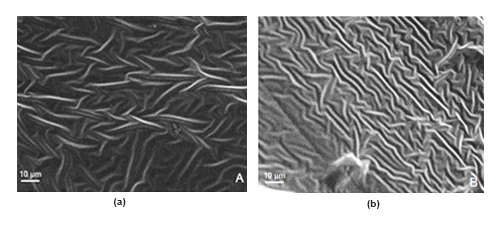
The main objective of this study is to develop an economic, environmentally friendly and malleable biomaterial for tissue engineering applications. Water and glycerol have been used as solvents for the gelatin hydrogel synthesis. This solvent mixture led to a biomaterial with improved thermal properties. Indeed, a 16°C increase in thermal transition temperature was achieved. Furthermore, to enhance mechanical properties, riboflavin was used as a crosslinking agent. Chemical crosslinking step was initiated with UV radiation to obtain riboflavin radical polymerization of gelatin chains, hence, rheological properties of gelatin hydrogel were improved. Thus, Gelatin-UV-Riboflavin hydrogel showed good swelling and increased mechanical properties, obtaining a novel material for drug delivery and medical purposes.
How to Cite
(2019). Riboflavin-UVA gelatin crosslinking: Design of a biocompatible and thermo-responsive biomaterial with enhanced mechanical properties for tissue engineering. Advanced Materials Letters, 10(5), 324-328. https://doi.org/10.5185/amlett.2019.2210