
Article Sections
Micromechanical Fatigue Modelling of the Size Effect in Micro-Scale 316L Stainless Steel Specimens
Loading author information...
Graphical Abstract & Abstract
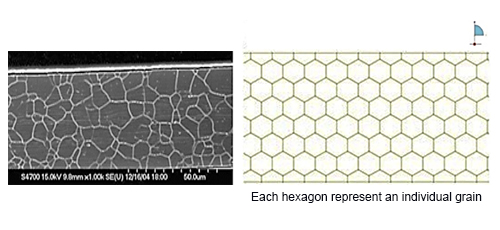
For many years, computational modelling and simulation studies have been used by developers to advance device design and have been reported in regulatory medical device submissions. However, cardiovascular stent materials in such computational models are typically assumed to behave as a continuum. This approach assumes that bulk material properties apply to the micro-sized structure, i.e. material behavior is scale independent. However, as size is reduced, mechanical size effects arise as the grain size to specimen width ratio drops below a critical value. These size effects cause material behavior to deviate significantly from bulk material behavior. If such a deviation in material behavior is to be captured within computational models, it is necessary to represent the crystalline structure of a metal and to capture the anisotropic behavior of individual grains within these models. This paper describes the development of such a modelling methodology to investigate the phenomenon of st
How to Cite
(2019). Micromechanical Fatigue Modelling of the Size Effect in Micro-Scale 316L Stainless Steel Specimens. Advanced Materials Letters, 10(7), 455-459. https://doi.org/10.5185/amlett.2019.9812