
Article Sections
Cerebral Oxygenation Studies Through Near Infrared Spectroscopy: A Review
Loading author information...
Graphical Abstract & Abstract
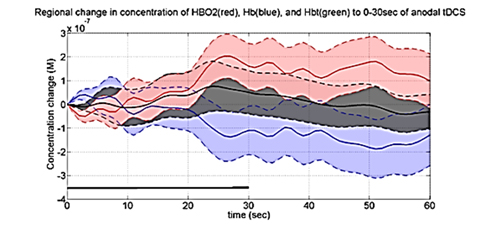
Near-infrared spectroscopy (NIRS) is increasingly becoming popular for monitoring cerebral oxygenation level by measuring the time variations in the concentrations of oxygenated hemoglobin (HbO2) and deoxygenated hemoglobin (Hb). Studies on cross section of the cerebro-vascular artery suggest that impaired haemodynamics of cerebrovascular artery is followed by transient ischemic attack (TIA) and ischemic stroke. Here, cerebrovascular reactivity (CVR) signifies the dilation capacity of blood vessels, and is a remarkable bio-marker for brain vascular reserve. The CVR may be effectively studied by monitoring cerebral oxygenation level, which if coupled with anodal transcranial direct current stimulation can serve as an important biomarker to classify between stroke and non-stroke patients, thereby providing for an imminent screening and monitoring tool. The neural activity of cerebral cortex may be controlled with transcranial direct current stimulation (tDCS) where the NIRScan be used to
Keywords
How to Cite
(2020). Cerebral Oxygenation Studies Through Near Infrared Spectroscopy: A Review. Advanced Materials Letters, 11(3), 1-10. https://doi.org/10.5185/amlett.2020.031482