
Article Sections
Are Quantitatively Micro-machined Scaffolds Effective for Cell Technology?
Loading author information...
Graphical Abstract & Abstract
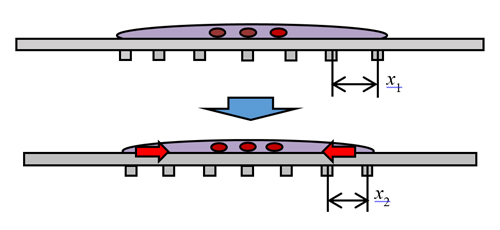
Biological cells adsorb on the scaffold, and show activities: migration, deformation, proliferation, and differentiation. The micro morphology (close to the cell size) on the surface of the scaffold (made by the photolithography technique) is effective for several applications: the marker to trace each cell, and the tool to control the activity of each cell. C2C12 (mouse myoblast) is used in the present study. The typical diameter of the cell is 20 μm, when it is suspended in the medium. The cell aligns along the micro step of the height (> 0.7 μm). The micro-striped groove can control the cell orientation in the flow channel. The aspect ratio of the checkered convexo-concave pattern can control the orientation of cells. When cells are cultured on the thin film (thickness 6 μm, polydimethylsiloxane) with the micro markers at the counter surface, the local contraction movement of myotubes by the electrical-pulse stimulation can be microscopically measured through the transparent scaffol
How to Cite
(2020). Are Quantitatively Micro-machined Scaffolds Effective for Cell Technology?. Advanced Materials Letters, 11(3), 1-4. https://doi.org/10.5185/amlett.2020.031490