
Article Sections
Development of Ruthenium Complex Based Sensitizers, Organic Based Sensitizers, and Co-sensitization System for Dye-sensitized Solar Cells
Loading author information...
Graphical Abstract & Abstract
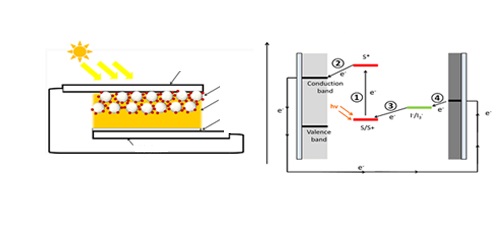
This paper reviews the recent development of ruthenium complex sensitizers, organic sensitizers, and co-sensitizers for dye-sensitized solar cell (DSSC) applications. The development of ruthenium sensitizers has progressed from thiocyanate (NCS) ligands containing bipyridyl, terpyridyl, quarterpyridyl, and cyclometalated ruthenium sensitizers to NCS-free analogs. The integration of organic moieties and ruthenium complex ancillary ligands into a single structure entity was also achieved in the DSSC industry. The development of organic sensitizers as an alternative to ruthenium-based sensitizers was also discussed according to their functional segment: donor, acceptor, and π-spacer. The modification of donor groups has been focused on introducing ancillary groups to increase the molar extinction coefficient and electron recombination resistance. Anchoring groups other than cyanoacrylic acids have been developed to improve the anchoring ability of organic sensitizers while maintaining the
How to Cite
(2020). Development of Ruthenium Complex Based Sensitizers, Organic Based Sensitizers, and Co-sensitization System for Dye-sensitized Solar Cells. Advanced Materials Letters, 11(6), 1-12. https://doi.org/10.5185/amlett.2020.061522