
Article Sections
G4 self-assembly as an intrinsic nucleic acid function
Loading author information...
Graphical Abstract & Abstract
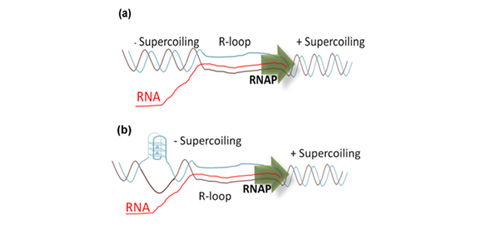
It is now commonly acknowledged that G-rich polynucleotide sites can fold into G-quadruplex (G4) structures in vivo. In terms of molecular programming, the G4-folding propensity can be regarded as a build-in nucleic acid function with multiple implications for genomic regulation. Here we review several important advances in the studies of G4 self-assemblies in genomic context. We discuss prerequisites and consequences of G4 formation upon transcription or replication and analyze recent data on G4-dependent genomic rearrangements, including translocation and recombination. Hypothetical mechanisms of those G4-dependent rearrangements suggest self-association of G-rich sites. We outline the general molecular basis for possible self-association pathways, i.e., formation of intermolecular G4 assemblies or interquadruplex stacking. Intermolecular G4s and multimeric G4 stacks attract widespread interest as scaffolds for the development of complex junctions in DNA nanotechnology and have prosp
How to Cite
(2018). G4 self-assembly as an intrinsic nucleic acid function. Advanced Materials Letters, 9(2), 91-96. https://doi.org/10.5185/amlett.2018.2003