
Article Sections
Glucose detection via Ru-mediated catalytic reaction of glucose dehydrogenase
Loading author information...
Graphical Abstract & Abstract
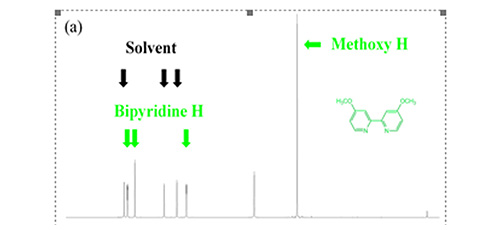
In the electrochemical glucose sensor field, glucose dehydrogenase (GDH) has attracted attention as an enzyme alternative to glucose oxidase (GOD), which suffers performance issues due to variability in oxygen concentrations. The typical mediator used with GOD in electrochemical glucose sensors, hexamine ([Ru(dmo-bpy)2Cl2]), was synthesized and applied to facilitate electron transfer between GDH and the electrode. The prepared [Ru(dmo-bpy)2Cl2] was examined physicochemically by NMR, UV-vis, and XPS spectroscopy, and electrochemically by CV. Then, GDH and a cross linker, poly (ethylene glycol) diglycidyl ether, were adsorbed with [Ru(dmo-bpy)2Cl2] onto a screen-printed carbon electrode. The glucose response of [Ru(dmo-bpy)2Cl2] with GDH as an electron-transfer mediator was investigated by potentiostat. The resulting electrical currents were well correlated (R 2 = 0.9984) with glucose concentration (5.0, 10.0, 15.0, and 30.0 mM). Therefore, this ruthenium complex can be used for glucose
How to Cite
(2018). Glucose detection via Ru-mediated catalytic reaction of glucose dehydrogenase. Advanced Materials Letters, 9(3), 220-224. https://doi.org/10.5185/amlett.2018.1947