
Article Sections
Assessment of Pollution Level of Soil Contaminated by Fertilizer Industry Waste
Loading author information...
Graphical Abstract & Abstract
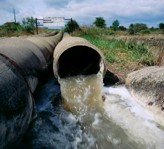
Organic compounds, alcohols, ammonia, nitrates, phosphorous, and suspended solids are the main constituents of waste from the chemical fertilizer industry. Heavy metals are natural constituents of soils and their concentration varies depending on parental materials. In the last years, the content of heavy metals in soils has increased due to distribution of fertilizers waste, pesticides, industries, waste disposal. Due to these activities the life capacity of soils decreased; especially where the natural background is already high because of natural parental material richness in heavy metal. As a matter of fact it is very important to distinguish between the natural background values and anthropogenic inputs, and to understand that the background values change from area to area and with the scale of the area investigated. There is currently a wide variety of methods used to evaluate soil contamination. To evaluate the soil contamination rate Geo-accumulation index (Igeo) can be applied
How to Cite
(2024). Assessment of Pollution Level of Soil Contaminated by Fertilizer Industry Waste. Advanced Materials Letters, 15(1), 2401-1743. https://doi.org/10.5185/amlett.2024.011743