
Article Sections
Polymeric Energy Materials: Development and Challenges
Loading author information...
Graphical Abstract & Abstract
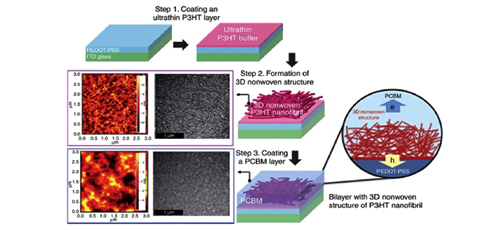
The discovery of conjugated, conducting polymers (CPs) polyacetylene (PA) in 1977 opened up a new frontier in the field of polymer science for both academia and industries. CPs possess characteristics such as excellent tunability, ease of synthesis, eco-friendliness, processability etc. These features have enabled the exploration of its applicability in energy and electronics devices. It has also paved way for extensive research world over to develop novel methods for synthesizing CPs with required properties. An important area in the field of synthesis of CPs is to produce conducting nanocomposites with the combination of conducting polymers and inorganic materials in order to achieve high magnitude of electrical conductivity. Several polymeric materials such as, as poly(3,4ethylenedioxythiophene) (PEDOT), polypyrrole (PPy), and polyaniline (PANI) have exhibited potential in various applications such as, “energy harvesting”, “energy storage”, “light emitting”, and “sensing”. The objec
How to Cite
(2020). Polymeric Energy Materials: Development and Challenges. Advanced Materials Letters, 11(11), 1-6. https://doi.org/10.5185/amlett.2020.111571